Bands
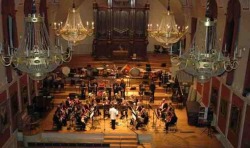
Below can be found a list of the various bands that Craig has worked with to date
Further information on each can be found by clicking on the links to their individual websites, where available
Additional information on various projects involving some of these bands can be found in the projects section of this site
Further information on each can be found by clicking on the links to their individual websites, where available
Additional information on various projects involving some of these bands can be found in the projects section of this site
Lewis Merthyr Band
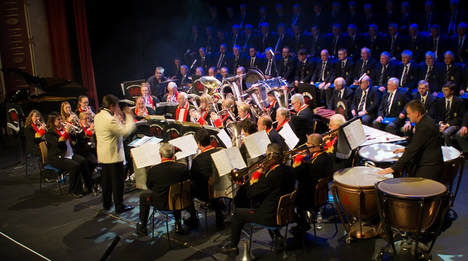
Founded in or before 1855, Lewis Merthyr Band is the oldest brass band in South Wales' Rhondda Valleys. Originally known as the Cymmer Military and Cymmer (Porth) Colliery Band, Lewis Merthyr adopted its present title in 1949
The band has been highly successful in competition throughout its history, becoming Champion Band of Wales, Welsh League Champions, Miner's Welfare Entertainments (CISWO) Champions and more
Lewis Merthyr has represented Wales in the Championship section of the National Championships of Great Britain on eight occasions at the Royal Albert Hall, London; at the European Championships in Copenhagen, Denmark; and at the 2022 World Music Contest in Kerkrade, Netherlands. The band also accomplished the unique achievement of winning the Second and Third Section UK titles of the National Championships of Great Britain, in consecutive years. Lewis Merthyr is currently ranked in the First Section and were the 2015 Runner-Up WWBBA Champions; 2016 Runner-Up SEWBBA Champions & Runner-Up Welsh League Champions in both 2015 & 2016. 2017 was a particularly successful year for the band and saw Lewis Merthyr become the WWBBA and - for the first time in 21 years - Welsh League First Section Champions
The band has been equally successful on the concert stage, performing at a wide variety of locations across Wales and beyond, including the Royal Albert Hall, London; Llangollen Pavilion; St David's Hall, Cardiff & the Brangwyn Hall, Swansea. Lewis Merthyr has also performed for Royalty on a number of occasions, parading through the streets for the visit of His Majesty King George V and Queen Mary to Rhondda in 1912, and for the Prince of Wales, later King Edward VIII, in 1932. On June 2nd, 2022, the band also featured in an incredible performance for the Beacon Lighting ceremony on the Thames Bank, London, in celebration of the Platinum Jubilee of Her Majesty Queen Elizabeth II. In September 2023, an ensemble from the band also performed for the First Minister of Wales, First Lady of Iraq and other distinguished guests in an event which also featured a speech from the former Prime Minister of the UK, Sir Tony Blair
Throughout its history, the band has performed with numerous leading artists, including "Signor Foli" (Allan James Foley) in the late 1800's, and with Sir Geraint Evans, Glyn Houston and most recently Sir Bryn Terfel. In recent years, the band has also featured in a series of concerts under the baton of renowned orchestral conductor Owain Arwel Hughes CBE, which included a St David's Day Gala Concert at the Brangwyn Hall, Swansea; a performance in the Speech Room at Harrow School, London; and two performances at Wales' national classical music festival, the Welsh Proms, in July 2018 & 2019, at the national concert hall of Wales, St David's Hall, Cardiff. In 2023, the band performed at the prestigious Three Choirs Festival at Gloucester Cathedral, and was the core ensemble of the inaugural Oriana Festival, a showcase of the finest Welsh classical contemporary music, where Lewis Merthyr performed together with former Royal Harpist Claire Jones, composer | percussionist Chris Marshall and Big Hearts International Nigeria, also giving the premiere performance of six new works for brass by Grace Williams, Chris Marshall, Christopher Painter, Gareth Trott & Gareth Wood and a recital of the works for brass by Mervyn Burtch
Lewis Merthyr has featured in a wide range of radio & television broadcasts, dating back to a recently rediscovered BBC Radio broadcast from 1927, and Pathé newsreel footage of the band marching before King Edward VIII in 1932. More recently, the band was featured in the 2015 BBC television programme "The Taff: The River That Made Wales" which continues to be repeatedly screened on BBC Two, BBC Four and BBC Wales. Lewis Merthyr also recently recorded a special television feature with the renowned international baritone soloist Sir Bryn Terfel, which was screened nationwide on Christmas Day 2017 and repeated for the opening night of the National Eisteddfod of Wales 2018. The band featured again on nationwide television, performing live in the National Eisteddfod, on stage at the Donald Gordon Theatre in the iconic Wales Millennium Centre the following day
Lewis Merthyr Band has featured in a wide range of major events, performing on numerous occasions at the Principality Stadium, playing to 52, 981 people plus international television audience for the Wales vs Italy warm up match for the 2015 Rugby World Cup; to record Pro14 crowds of 68,262 and 62,338 for Judgement Day 2016 & 2018; and for the Opening Ceremony of the 2016 World Golden Oldies International Rugby Festival, which featured 120 participating teams representing 25 different nations from across the globe
Lewis Merthyr was also the core of Wales' first all-female band for each of Wales' 2017 Women's Rugby Six Nations Championship home matches, and again for the 2018 Women's Suffrage Centennial "Processions" event at Cardiff Castle in July 2018. The band also performed for the televised Women's Rugby Six Nations international matches at Cardiff Arms Park for the full 2019, 2020 and 2022 seasons
Lewis Merthyr featured in National Theatre Wales' 2016 “City of the Unexpected” Roald Dahl 100 celebrations, performing across Cardiff city centre to tens of thousands of people, and which was again the focus of national television broadcasts. In April 2018, the band also supported the 11.2 metre "Man Engine" events at Cyfartha Castle and Ynysangharad Park, Pontypridd. In June 2018 the band's symphonic brass ensemble performed for the launch of the Music Education report for Wales at the Royal Welsh College of Music & Drama, additional contributors to which included Sir Karl Jenkins, Nicola Benedetti CBE, cellist Sheku Kanneh-Mason and Claire Jones
In October 2019, the band then travelled to Belgium to perform alongside groups from Belgium, France, Germany, Italy, the Netherlands and South Korea at the Internationale Taptoe Belgie, held at the 5000 seat capacity Versluys Dome, Ostend. In July 2022, the band returned to Europe to perform in the prestigious World Music Contest in Kerkrade, Netherlands
Lewis Merthyr Band has a long history of performing and broadcasting new works, and has held a close association with numerous prominent composers, notably Mervyn Burtch and John Golland. The band gave the premiere broadcasts of Dr. Peter Graham's "Dimensions" and Goff Richards' "Oceans" on BBC Radio in the 1980s, and in 2018 gave the premiere performances of Helen Woods' "Man Engine Anthem" and Dr. Christopher Wood's "Aberfan", also undertaking the premiere recording of the latter on the band's most recent commercial recording "Brass & Voices of Wales" with the massed choirs of Bridgend & Pendyrus, conducted by Owain Arwel Hughes. The band's latest albums, a recording of the brass works of Mervyn Burtch and a Christmas album, will be released for Christmas 2023
Through the latter half of 2020, with the support of the Arts Council of Wales, the band created the project "New Directions", a partnership with a selection of leading composers and performers from across Wales and wider, which saw newly commissioned works from Steve Bingham, Chris Marshall, Christopher Painter and Andrew Powell. Through 2022-24, with the additional support of ACW, the Moondance Foundation and Ty Cerdd, the band commissioned and premiered four major new works for band from Chris Marshall (Fulling Mill Lea), Gareth Trott (Eastern Horizons and Aberfan Requirm) and Gareth Wood (Under Milk Wood Suite: Rum & Laverbread)
Lewis-Merthyr remain thoroughly committed to supporting its local community in Rhondda Cynon Taf, through the presentation of concert performances across the county borough and wider, supporting local events & functions, and providing tuition for local young brass & percussion musicians through our Youth Band programme. The band looks forward to continuing to represent Rhondda Cynon Taf and Wales at the highest level throughout all our performances across the nation and beyond
Registered Charity No. 1000499
Further information on Lewis Merthyr Band can be found at www.lewismerthyrband.com
The band has been highly successful in competition throughout its history, becoming Champion Band of Wales, Welsh League Champions, Miner's Welfare Entertainments (CISWO) Champions and more
Lewis Merthyr has represented Wales in the Championship section of the National Championships of Great Britain on eight occasions at the Royal Albert Hall, London; at the European Championships in Copenhagen, Denmark; and at the 2022 World Music Contest in Kerkrade, Netherlands. The band also accomplished the unique achievement of winning the Second and Third Section UK titles of the National Championships of Great Britain, in consecutive years. Lewis Merthyr is currently ranked in the First Section and were the 2015 Runner-Up WWBBA Champions; 2016 Runner-Up SEWBBA Champions & Runner-Up Welsh League Champions in both 2015 & 2016. 2017 was a particularly successful year for the band and saw Lewis Merthyr become the WWBBA and - for the first time in 21 years - Welsh League First Section Champions
The band has been equally successful on the concert stage, performing at a wide variety of locations across Wales and beyond, including the Royal Albert Hall, London; Llangollen Pavilion; St David's Hall, Cardiff & the Brangwyn Hall, Swansea. Lewis Merthyr has also performed for Royalty on a number of occasions, parading through the streets for the visit of His Majesty King George V and Queen Mary to Rhondda in 1912, and for the Prince of Wales, later King Edward VIII, in 1932. On June 2nd, 2022, the band also featured in an incredible performance for the Beacon Lighting ceremony on the Thames Bank, London, in celebration of the Platinum Jubilee of Her Majesty Queen Elizabeth II. In September 2023, an ensemble from the band also performed for the First Minister of Wales, First Lady of Iraq and other distinguished guests in an event which also featured a speech from the former Prime Minister of the UK, Sir Tony Blair
Throughout its history, the band has performed with numerous leading artists, including "Signor Foli" (Allan James Foley) in the late 1800's, and with Sir Geraint Evans, Glyn Houston and most recently Sir Bryn Terfel. In recent years, the band has also featured in a series of concerts under the baton of renowned orchestral conductor Owain Arwel Hughes CBE, which included a St David's Day Gala Concert at the Brangwyn Hall, Swansea; a performance in the Speech Room at Harrow School, London; and two performances at Wales' national classical music festival, the Welsh Proms, in July 2018 & 2019, at the national concert hall of Wales, St David's Hall, Cardiff. In 2023, the band performed at the prestigious Three Choirs Festival at Gloucester Cathedral, and was the core ensemble of the inaugural Oriana Festival, a showcase of the finest Welsh classical contemporary music, where Lewis Merthyr performed together with former Royal Harpist Claire Jones, composer | percussionist Chris Marshall and Big Hearts International Nigeria, also giving the premiere performance of six new works for brass by Grace Williams, Chris Marshall, Christopher Painter, Gareth Trott & Gareth Wood and a recital of the works for brass by Mervyn Burtch
Lewis Merthyr has featured in a wide range of radio & television broadcasts, dating back to a recently rediscovered BBC Radio broadcast from 1927, and Pathé newsreel footage of the band marching before King Edward VIII in 1932. More recently, the band was featured in the 2015 BBC television programme "The Taff: The River That Made Wales" which continues to be repeatedly screened on BBC Two, BBC Four and BBC Wales. Lewis Merthyr also recently recorded a special television feature with the renowned international baritone soloist Sir Bryn Terfel, which was screened nationwide on Christmas Day 2017 and repeated for the opening night of the National Eisteddfod of Wales 2018. The band featured again on nationwide television, performing live in the National Eisteddfod, on stage at the Donald Gordon Theatre in the iconic Wales Millennium Centre the following day
Lewis Merthyr Band has featured in a wide range of major events, performing on numerous occasions at the Principality Stadium, playing to 52, 981 people plus international television audience for the Wales vs Italy warm up match for the 2015 Rugby World Cup; to record Pro14 crowds of 68,262 and 62,338 for Judgement Day 2016 & 2018; and for the Opening Ceremony of the 2016 World Golden Oldies International Rugby Festival, which featured 120 participating teams representing 25 different nations from across the globe
Lewis Merthyr was also the core of Wales' first all-female band for each of Wales' 2017 Women's Rugby Six Nations Championship home matches, and again for the 2018 Women's Suffrage Centennial "Processions" event at Cardiff Castle in July 2018. The band also performed for the televised Women's Rugby Six Nations international matches at Cardiff Arms Park for the full 2019, 2020 and 2022 seasons
Lewis Merthyr featured in National Theatre Wales' 2016 “City of the Unexpected” Roald Dahl 100 celebrations, performing across Cardiff city centre to tens of thousands of people, and which was again the focus of national television broadcasts. In April 2018, the band also supported the 11.2 metre "Man Engine" events at Cyfartha Castle and Ynysangharad Park, Pontypridd. In June 2018 the band's symphonic brass ensemble performed for the launch of the Music Education report for Wales at the Royal Welsh College of Music & Drama, additional contributors to which included Sir Karl Jenkins, Nicola Benedetti CBE, cellist Sheku Kanneh-Mason and Claire Jones
In October 2019, the band then travelled to Belgium to perform alongside groups from Belgium, France, Germany, Italy, the Netherlands and South Korea at the Internationale Taptoe Belgie, held at the 5000 seat capacity Versluys Dome, Ostend. In July 2022, the band returned to Europe to perform in the prestigious World Music Contest in Kerkrade, Netherlands
Lewis Merthyr Band has a long history of performing and broadcasting new works, and has held a close association with numerous prominent composers, notably Mervyn Burtch and John Golland. The band gave the premiere broadcasts of Dr. Peter Graham's "Dimensions" and Goff Richards' "Oceans" on BBC Radio in the 1980s, and in 2018 gave the premiere performances of Helen Woods' "Man Engine Anthem" and Dr. Christopher Wood's "Aberfan", also undertaking the premiere recording of the latter on the band's most recent commercial recording "Brass & Voices of Wales" with the massed choirs of Bridgend & Pendyrus, conducted by Owain Arwel Hughes. The band's latest albums, a recording of the brass works of Mervyn Burtch and a Christmas album, will be released for Christmas 2023
Through the latter half of 2020, with the support of the Arts Council of Wales, the band created the project "New Directions", a partnership with a selection of leading composers and performers from across Wales and wider, which saw newly commissioned works from Steve Bingham, Chris Marshall, Christopher Painter and Andrew Powell. Through 2022-24, with the additional support of ACW, the Moondance Foundation and Ty Cerdd, the band commissioned and premiered four major new works for band from Chris Marshall (Fulling Mill Lea), Gareth Trott (Eastern Horizons and Aberfan Requirm) and Gareth Wood (Under Milk Wood Suite: Rum & Laverbread)
Lewis-Merthyr remain thoroughly committed to supporting its local community in Rhondda Cynon Taf, through the presentation of concert performances across the county borough and wider, supporting local events & functions, and providing tuition for local young brass & percussion musicians through our Youth Band programme. The band looks forward to continuing to represent Rhondda Cynon Taf and Wales at the highest level throughout all our performances across the nation and beyond
Registered Charity No. 1000499
Further information on Lewis Merthyr Band can be found at www.lewismerthyrband.com
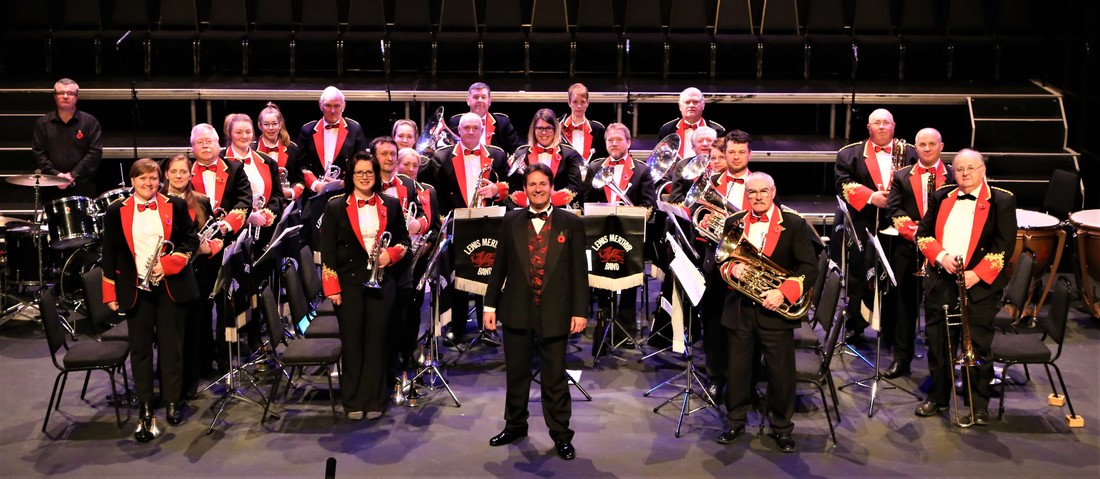
City of Bristol Brass Band
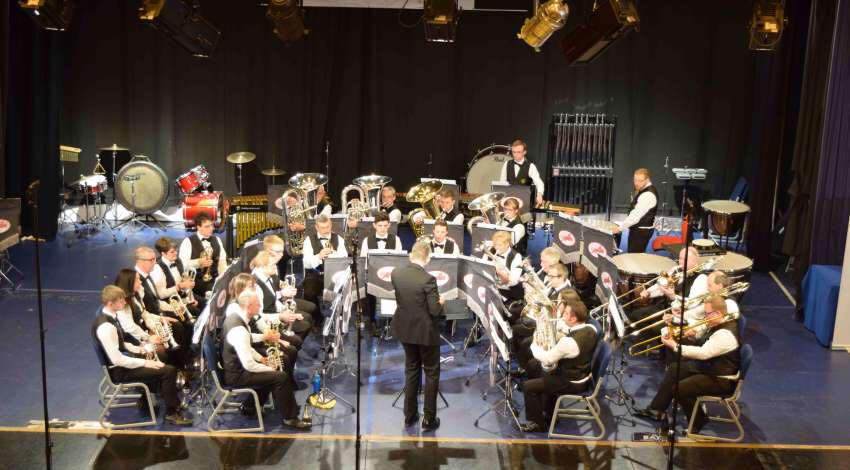
Brass bands in Bristol date back to at least 1850, with a number recorded as performing for the opening of the city’s iconic Clifton Suspension Bridge in 1864. The sound of the brass band has remained a core element of the musical fabric of the city to this day
City of Bristol Brass Band itself was formed in 1936 by local businessman H S Perry (who also played euphonium in the band) and the former Lord Mayor of Bristol, William George Cozens. Originally entitled “Fishponds British Legion Band”, the band adopted its present title in the mid 1960s
City of Bristol has been highly successful in both concert and competition throughout its history, becoming ODBBA, GBBA and West of England Regional Champions, and has also represented the city and region in the National Brass Band Championships of Great Britain on numerous occasions. In March 2024, the band were again crowned West of England First Section Champions, being placed first out of 18 bands in the 2024 championships at the Riviera Centre, Torquay. As a result, in September 2024, City of Bristol will go on to represent the West of England in the Finals of the National Championships of Great Britain at The Centaur, Cheltenham, and will be promoted to Championship section in 2025
The band has performed at a wealth of venues across the UK, including the Royal Albert Hall and Alexandra Palace, London; De Montfort Hall, Leicester; The Centaur, Cheltenham; Riviera Centre, Torquay, St George’s, Bristol and many more
In June 2022, the band was delighted to perform as part of the Tall Ships Festival at Llanthony Secunda Priory, Gloucester, and also to support the Platinum Jubilee celebrations of Her Majesty Queen Elizabeth II, performing as part of a massed Hallelujah Chorus flash mob throughout Bristol, culminating at Bristol Cathedral and College Green
In September 2022, the band broadened its performance horizons further, travelling to Colorado, USA, to perform in the Estes Park International Tattoo and Long’s Peak International Scottish-Irish Highland Festival. The band made history while in Colorado: the sad passing of Her Majesty Queen Elizabeth II took place while the band were mid-rehearsal for the 2022 Estes Park International Tattoo. Just six minutes after the announcement of the passing of Her Majesty, the band together with the 3rd US Marine Aircraft Wing Band, became the first performers in 70 years to perform "God Save The King", and one day later appeared in the first major international event to perform the same
The band's achievements continued in 2023, with City of Bristol performing in "Sing For The King", which saw the band perform together with a massed choir of 650 voices (this year being the 650th anniversary of Bristol city) at Bristol Cathedral, in a performance of Handel's "Zadok The Priest" and additional coronation anthems, a copy of which was then gifted to Buckingham Palace as the city's gift on the occasion of the Coronation of King Charles III
City of Bristol is a keen advocate and supporter of new music. In recent years, the band has performed Dr Liz Lane’s “Innovation 216” tribute to Concorde - beneath the wings of the iconic aircraft itself! - at Aerospace Bristol in 2020, before giving the premiere performance of Laura Shipsey’s “Of Far Flung Skies” in a performance at St George’s which was recorded and broadcast on BBC Radio 3
In September 2022, the band presented its new performance project, “Eastern Horizons” which featured the premiere performance of two new works composed especially for City of Bristol by Hong Kong born (and BBC National Orchestra of Wales performed) composer Mandy Leung, plus the title suite by British Army composer Gareth Trott
In December 2022, City of Bristol also presented its new Christmas package “The Snowman Live” at the Curzon Cinema, Clevedon, which saw two sell-out performances. Such was the success of the project, the performance was repeated in December 2023 in four sell out performances at both the Curzon and also St George's, Bristol
City of Bristol Brass Band is always keen to work with new partners and venues. New performance partners for 2023 included 1532 Performing Arts Centre, Trinity Academy, Rock Choir South West England, Homechoir, UWE Singers and more. The band was delighted to again work with the Curzon Cinema on their 111th anniversary celebrations in May, performing our popular "Day at the Movies" concert, which included live performance screenings of early films by British film pioneer William Haggar, and the English premiere of Christopher Painter's transcription for brass of Grace Williams' "Mountain Scene" (from The Blue Scar), the first film soundtrack written by a female composer
In 2024, the band will feature in a Lord of the Rings themed concert project, marking the 70th anniversary of the publication of J. R. R. Tolkien's iconic fantasy classic. Performances will be undertaken in massed bands with South Wales' Lewis Merthyr Band at the prestigious Oriana Festival at St Elvan's, Cynon Valley in May, and again at Bristol Cathedral in September
For further details of all the band’s forthcoming events and projects visit the COBBB website or connect with the band via its various social media channels on Facebook, Twitter, and Instagram
City of Bristol Brass Band itself was formed in 1936 by local businessman H S Perry (who also played euphonium in the band) and the former Lord Mayor of Bristol, William George Cozens. Originally entitled “Fishponds British Legion Band”, the band adopted its present title in the mid 1960s
City of Bristol has been highly successful in both concert and competition throughout its history, becoming ODBBA, GBBA and West of England Regional Champions, and has also represented the city and region in the National Brass Band Championships of Great Britain on numerous occasions. In March 2024, the band were again crowned West of England First Section Champions, being placed first out of 18 bands in the 2024 championships at the Riviera Centre, Torquay. As a result, in September 2024, City of Bristol will go on to represent the West of England in the Finals of the National Championships of Great Britain at The Centaur, Cheltenham, and will be promoted to Championship section in 2025
The band has performed at a wealth of venues across the UK, including the Royal Albert Hall and Alexandra Palace, London; De Montfort Hall, Leicester; The Centaur, Cheltenham; Riviera Centre, Torquay, St George’s, Bristol and many more
In June 2022, the band was delighted to perform as part of the Tall Ships Festival at Llanthony Secunda Priory, Gloucester, and also to support the Platinum Jubilee celebrations of Her Majesty Queen Elizabeth II, performing as part of a massed Hallelujah Chorus flash mob throughout Bristol, culminating at Bristol Cathedral and College Green
In September 2022, the band broadened its performance horizons further, travelling to Colorado, USA, to perform in the Estes Park International Tattoo and Long’s Peak International Scottish-Irish Highland Festival. The band made history while in Colorado: the sad passing of Her Majesty Queen Elizabeth II took place while the band were mid-rehearsal for the 2022 Estes Park International Tattoo. Just six minutes after the announcement of the passing of Her Majesty, the band together with the 3rd US Marine Aircraft Wing Band, became the first performers in 70 years to perform "God Save The King", and one day later appeared in the first major international event to perform the same
The band's achievements continued in 2023, with City of Bristol performing in "Sing For The King", which saw the band perform together with a massed choir of 650 voices (this year being the 650th anniversary of Bristol city) at Bristol Cathedral, in a performance of Handel's "Zadok The Priest" and additional coronation anthems, a copy of which was then gifted to Buckingham Palace as the city's gift on the occasion of the Coronation of King Charles III
City of Bristol is a keen advocate and supporter of new music. In recent years, the band has performed Dr Liz Lane’s “Innovation 216” tribute to Concorde - beneath the wings of the iconic aircraft itself! - at Aerospace Bristol in 2020, before giving the premiere performance of Laura Shipsey’s “Of Far Flung Skies” in a performance at St George’s which was recorded and broadcast on BBC Radio 3
In September 2022, the band presented its new performance project, “Eastern Horizons” which featured the premiere performance of two new works composed especially for City of Bristol by Hong Kong born (and BBC National Orchestra of Wales performed) composer Mandy Leung, plus the title suite by British Army composer Gareth Trott
In December 2022, City of Bristol also presented its new Christmas package “The Snowman Live” at the Curzon Cinema, Clevedon, which saw two sell-out performances. Such was the success of the project, the performance was repeated in December 2023 in four sell out performances at both the Curzon and also St George's, Bristol
City of Bristol Brass Band is always keen to work with new partners and venues. New performance partners for 2023 included 1532 Performing Arts Centre, Trinity Academy, Rock Choir South West England, Homechoir, UWE Singers and more. The band was delighted to again work with the Curzon Cinema on their 111th anniversary celebrations in May, performing our popular "Day at the Movies" concert, which included live performance screenings of early films by British film pioneer William Haggar, and the English premiere of Christopher Painter's transcription for brass of Grace Williams' "Mountain Scene" (from The Blue Scar), the first film soundtrack written by a female composer
In 2024, the band will feature in a Lord of the Rings themed concert project, marking the 70th anniversary of the publication of J. R. R. Tolkien's iconic fantasy classic. Performances will be undertaken in massed bands with South Wales' Lewis Merthyr Band at the prestigious Oriana Festival at St Elvan's, Cynon Valley in May, and again at Bristol Cathedral in September
For further details of all the band’s forthcoming events and projects visit the COBBB website or connect with the band via its various social media channels on Facebook, Twitter, and Instagram
Veterans Concert Band Wales
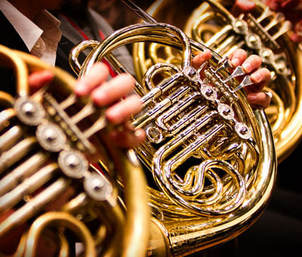
Veterans Concert Band Wales is a symphonic wind orchestra / concert band based in South Wales, United Kingdom.
The band was formed in January 2016, in order to provide performance opportunities for current and ex-service musicians, and raise funds for charitable causes through concert activities. Members are a mix of Veteran military musicians and Associate civilian members drawn from across South West Wales.
Craig was the founding Director of Music and remained with the band, until relinquishing his position in April 2018. Through Craig's tenure, VCB Wales engagements included solo, ensemble and full band performances for the Commonwealth War Graves Commission, as part of the nationwide Last Post Project; a performance at the Welsh Proms Cymru at St David's Hall, Cardiff; a performance at the main South Wales Armed Forces Day event held in Caerphilly Castle; a recording session with Rondo Media for S4C's Band Cymru television programme; plus additional events at Talgarth, Llandovery, Hay-On-Wye and a gala concert performance for Hafal and their Forces For Change campaign at the Princess Royal Theatre, Neath Port Talbot.
Further information on VCB Wales can be found at their website here or the band can also be reached on both Facebook and Twitter
The band was formed in January 2016, in order to provide performance opportunities for current and ex-service musicians, and raise funds for charitable causes through concert activities. Members are a mix of Veteran military musicians and Associate civilian members drawn from across South West Wales.
Craig was the founding Director of Music and remained with the band, until relinquishing his position in April 2018. Through Craig's tenure, VCB Wales engagements included solo, ensemble and full band performances for the Commonwealth War Graves Commission, as part of the nationwide Last Post Project; a performance at the Welsh Proms Cymru at St David's Hall, Cardiff; a performance at the main South Wales Armed Forces Day event held in Caerphilly Castle; a recording session with Rondo Media for S4C's Band Cymru television programme; plus additional events at Talgarth, Llandovery, Hay-On-Wye and a gala concert performance for Hafal and their Forces For Change campaign at the Princess Royal Theatre, Neath Port Talbot.
Further information on VCB Wales can be found at their website here or the band can also be reached on both Facebook and Twitter
Abergavenny Borough Band
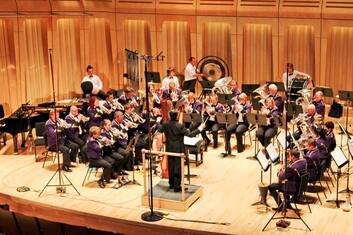
"Abergavenny Borough is a brass band as it should be - big sound, big heart, big round of applause" - Charles Hazlewood
The above quote was made by renowned conductor Charles Hazlewood in relation to Abergavenny Borough's success in the nationwide "Last Band Standing" competition, to appear at the closing performance of the London 2012 Olympic Park, which the band did, under Craig's direction, in September 2012.
Formed in the early 1900's Abergavenny has been National Eisteddfod and Welsh League Champions on numerous occasions since first achieving Championship status in 1982. Their most recent successes were under Craig's baton, becoming SEWBBA Champions in 2011, Joint Welsh League Champions in 2012, and GBBA Entertainment Champions in 2013 and 2015.
During Craig's tenure with Abergavenny, the band performed at a wealth of prestigious venues including St David's Hall, BBC Hoddinott Hall, the National Museum of Wales, the Royal Welsh College of Music & Drama, Wales Millennium Centre, Millennium Stadium and Senedd.
In September 2012, Abergavenny performed in the closing event of the London 2012 Olympic Park, leading the nationwide Cultural Olympiad "Bandstand Marathon" of 180 000 performers from there. One week later the band then performed for the nationally televised and broadcast Homecoming event for Welsh Olympic & Paralympic athletes at the Senedd, Cardiff Bay.
The band played to its largest live audience of more than 58 000 people, plus national television audience, during Craig's tenure, at the Millennium Stadium, Cardiff, performing there together with the massed WRU male choir.
Abergavenny has toured to Spain and Germany, undertaken two professional commercial recordings, and broadcasts for both BBC Radio 3 and BBC Radio Cymru. The band has worked with a range of leading professional conductors & soloists including Dr Robert Childs, David Childs, Philip Harper, Dr Hayden James, Dr Alwyn Humphreys and West End stars Peter Karrie, Sarah Lark and Katy Treharne. Abergavenny has also worked with the UK's favourite classical composer Dr Paul Mealor, who, at Craig's invitation, directed Abergavenny in the world premiere performance of his "Jubilate! Jubilee!", written to commemorate the Diamond Jubilee of Her Majesty Queen Elizabeth II in 2012.
In March 2013, Abergavenny was awarded the prestigious WS Gwynn Williams Award by the Centre for Welsh Music, Ty Cerdd, as the outstanding Welsh music society of that year, acknowledging the band's commitment to its local community and outstanding achievements under Craig's direction throughout 2012/13.
The above quote was made by renowned conductor Charles Hazlewood in relation to Abergavenny Borough's success in the nationwide "Last Band Standing" competition, to appear at the closing performance of the London 2012 Olympic Park, which the band did, under Craig's direction, in September 2012.
Formed in the early 1900's Abergavenny has been National Eisteddfod and Welsh League Champions on numerous occasions since first achieving Championship status in 1982. Their most recent successes were under Craig's baton, becoming SEWBBA Champions in 2011, Joint Welsh League Champions in 2012, and GBBA Entertainment Champions in 2013 and 2015.
During Craig's tenure with Abergavenny, the band performed at a wealth of prestigious venues including St David's Hall, BBC Hoddinott Hall, the National Museum of Wales, the Royal Welsh College of Music & Drama, Wales Millennium Centre, Millennium Stadium and Senedd.
In September 2012, Abergavenny performed in the closing event of the London 2012 Olympic Park, leading the nationwide Cultural Olympiad "Bandstand Marathon" of 180 000 performers from there. One week later the band then performed for the nationally televised and broadcast Homecoming event for Welsh Olympic & Paralympic athletes at the Senedd, Cardiff Bay.
The band played to its largest live audience of more than 58 000 people, plus national television audience, during Craig's tenure, at the Millennium Stadium, Cardiff, performing there together with the massed WRU male choir.
Abergavenny has toured to Spain and Germany, undertaken two professional commercial recordings, and broadcasts for both BBC Radio 3 and BBC Radio Cymru. The band has worked with a range of leading professional conductors & soloists including Dr Robert Childs, David Childs, Philip Harper, Dr Hayden James, Dr Alwyn Humphreys and West End stars Peter Karrie, Sarah Lark and Katy Treharne. Abergavenny has also worked with the UK's favourite classical composer Dr Paul Mealor, who, at Craig's invitation, directed Abergavenny in the world premiere performance of his "Jubilate! Jubilee!", written to commemorate the Diamond Jubilee of Her Majesty Queen Elizabeth II in 2012.
In March 2013, Abergavenny was awarded the prestigious WS Gwynn Williams Award by the Centre for Welsh Music, Ty Cerdd, as the outstanding Welsh music society of that year, acknowledging the band's commitment to its local community and outstanding achievements under Craig's direction throughout 2012/13.
Black Dyke Band
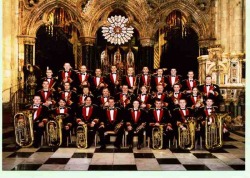
The Black Dyke Band, formerly the Black Dyke Mills Band, is one of the oldest and best known brass bands in the world. Based in Queensbury, North Yorkshire, the band is one of the most successful brass bands of all time.
Craig worked with the band in 2002 when they were guest artists at the 2002 Welsh Brass Arts Festival. At the event the band premiered, under Musical Director Nicholas Childs, Professor Edward Gregson's The Sword & the Crown, specially commissioned by Craig for the event.
Craig himself directed the massed bands of Black Dyke and Parc & Dare through Edward Watson's transcription of Walton's Henry V suite, which was narrated on the occasion by Welsh actor Philip Madoc
Craig was also fortunate to perform with the band in concert, under the baton of James Watson, at the Northern Brass Arts Festival, held at the Bridgewater Hall, Manchester, in the late 1990's, and also played with the band for rehearsals in preparation for the 1999 British Open Championships on Philip Wilby's "...Dove Descending"
Further information on Black Dyke can be found at the band's own website www.blackdyke.co.uk
Craig worked with the band in 2002 when they were guest artists at the 2002 Welsh Brass Arts Festival. At the event the band premiered, under Musical Director Nicholas Childs, Professor Edward Gregson's The Sword & the Crown, specially commissioned by Craig for the event.
Craig himself directed the massed bands of Black Dyke and Parc & Dare through Edward Watson's transcription of Walton's Henry V suite, which was narrated on the occasion by Welsh actor Philip Madoc
Craig was also fortunate to perform with the band in concert, under the baton of James Watson, at the Northern Brass Arts Festival, held at the Bridgewater Hall, Manchester, in the late 1990's, and also played with the band for rehearsals in preparation for the 1999 British Open Championships on Philip Wilby's "...Dove Descending"
Further information on Black Dyke can be found at the band's own website www.blackdyke.co.uk
Brighouse & Rastrick
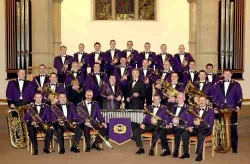
Brighouse & Rastrick is another of the world's most famous and successful brass bands. Craig worked with Brighouse and conductor David Hirst, when they were guest artists at the 2003 Welsh Brass Arts Festival At the event the band premiered, under David, Dr Paul Mealor's Rhapsody On A Theme of Purcell, again specially commissioned for the event by Craig.
Craig also directed the massed bands through the first performance of Dr Christian Jenkins' arrangement for brass band of John Williams' Olympic Spirit and an epic performance of Edward Gregson's The Sword and the Crown, which Craig had commissioned the previous year.
Many of the works performed in this concert are featured on the album Welsh Brass Arts Festival Volume II, available from Paragon Recordings. Further information on Brighouse & Rastrick can be found on the band's own site www.brighouseandrastrickband.com
Craig also directed the massed bands through the first performance of Dr Christian Jenkins' arrangement for brass band of John Williams' Olympic Spirit and an epic performance of Edward Gregson's The Sword and the Crown, which Craig had commissioned the previous year.
Many of the works performed in this concert are featured on the album Welsh Brass Arts Festival Volume II, available from Paragon Recordings. Further information on Brighouse & Rastrick can be found on the band's own site www.brighouseandrastrickband.com
Burry Port Town Band
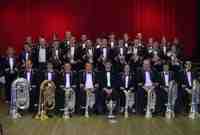
Burry Port Town Band (Band Pres Porth Tywyn) is a traditional brass band located in Burry Port near Llanelli, Carmarthenshire, South Wales, UK. Since January 2000, the band has competed in the Championship and First Section within Wales and across the UK. Burry Port has a busy schedule providing music for a wide variety of events including concerts, functions and local charitable events.
The band has been National Eisteddfod Champions, Champion Band of Wales and represented Wales on a number of occasions at the National Championships of Great Britain at the Royal Albert Hall, London. It has also won the prestigious Senior Cup at the Spring Brass Band Festival in Blackpool, England beating off competition from 20 of the UK’s finest bands. The band has also been joined in concert on various occasions by an impressive list of soloists including Burry Port's own West End Star John Owen Jones, opera divas Shan Cothi and Claire Hammacott, plus many other famous names from the stage and screen.
Craig took up the position of Musical Director with Burry Port in the summer of 2008. In 2008/09 the band undertook several performances of The Planets, an innovative concert project created in partnership by Craig, Professor Mark Brake and arts professional Judi Hughes. In the summer of 2009 it then hit the headlines in the UK and world media, undertaking their first international appearance by participating in the World Military Music Festival, held in Tripoli, Libya. 16 nations from 5 continents (Algeria, Australia, Austria, Egypt, France, Italy, Kenya, Libya, Malta, Mexico, New Zealand, Pakistan, Russia, Senegal, Tunisia, UK) were represented in the Festival, and Burry Port performed as part of the world class cast of military and civilian performers that assembled, and comprised of brass & military bands, medieval flagwavers (Sbandieratori Italia), pipe bands and dancers (the Waza Afrika Kenyan Dancers; Russian State Ballet Company and Nalmes State Academic Dance Company).
Under Craig's baton, in 2010 Burry Port also undertook their first major musical commission, Andrew Powell & Menna Elfyn's 'Y Dyn Unig', a cantata for tenor soloist, harp, mixed chorus, children's choir and brass band, which the band premiered at the Lyric Theatre, Carmarthen as part of the 2010 arts project The Red Lady of Paviland. Artists featured in the performance included the tenor Robyn Lyn and former Royal harpist Claire Jones. Further information on the project can be found in the projects section of this site.
During Craig's tenure Burry Port were also highly successful in competition, winning the 2008 WWBBA Championships on Philip Sparke's "Between the Moon & Mexico", becoming the overall 2009 Welsh League Champions following successful performances of Dr. Peter Graham's "Montage", and qualifying for the prestigious Grand Shield contest on their performance of Herbert Howells' "Pageantry" in the 2010 Senior Cup.
Further information on Burry Port Town Band can be found at their website www.burryporttownband.co.uk
The band has been National Eisteddfod Champions, Champion Band of Wales and represented Wales on a number of occasions at the National Championships of Great Britain at the Royal Albert Hall, London. It has also won the prestigious Senior Cup at the Spring Brass Band Festival in Blackpool, England beating off competition from 20 of the UK’s finest bands. The band has also been joined in concert on various occasions by an impressive list of soloists including Burry Port's own West End Star John Owen Jones, opera divas Shan Cothi and Claire Hammacott, plus many other famous names from the stage and screen.
Craig took up the position of Musical Director with Burry Port in the summer of 2008. In 2008/09 the band undertook several performances of The Planets, an innovative concert project created in partnership by Craig, Professor Mark Brake and arts professional Judi Hughes. In the summer of 2009 it then hit the headlines in the UK and world media, undertaking their first international appearance by participating in the World Military Music Festival, held in Tripoli, Libya. 16 nations from 5 continents (Algeria, Australia, Austria, Egypt, France, Italy, Kenya, Libya, Malta, Mexico, New Zealand, Pakistan, Russia, Senegal, Tunisia, UK) were represented in the Festival, and Burry Port performed as part of the world class cast of military and civilian performers that assembled, and comprised of brass & military bands, medieval flagwavers (Sbandieratori Italia), pipe bands and dancers (the Waza Afrika Kenyan Dancers; Russian State Ballet Company and Nalmes State Academic Dance Company).
Under Craig's baton, in 2010 Burry Port also undertook their first major musical commission, Andrew Powell & Menna Elfyn's 'Y Dyn Unig', a cantata for tenor soloist, harp, mixed chorus, children's choir and brass band, which the band premiered at the Lyric Theatre, Carmarthen as part of the 2010 arts project The Red Lady of Paviland. Artists featured in the performance included the tenor Robyn Lyn and former Royal harpist Claire Jones. Further information on the project can be found in the projects section of this site.
During Craig's tenure Burry Port were also highly successful in competition, winning the 2008 WWBBA Championships on Philip Sparke's "Between the Moon & Mexico", becoming the overall 2009 Welsh League Champions following successful performances of Dr. Peter Graham's "Montage", and qualifying for the prestigious Grand Shield contest on their performance of Herbert Howells' "Pageantry" in the 2010 Senior Cup.
Further information on Burry Port Town Band can be found at their website www.burryporttownband.co.uk
Band of the Ceremonial Guard, Ottawa
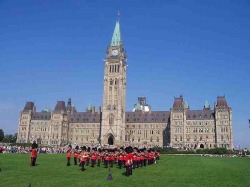
The Band of the Ceremonial Guard is part of the Canadian Forces Primary Reserves. It forms each year for the purpose of providing musical support for the world famous Changing the Guard ceremony on Parliament Hill - Ottawa. During this period the band is also tasked with supporting official functions held at Rideau Hall, foreign embassies, and other sites around the national capital region.
Distinctive in the scarlet uniform and bearskin headdress, the Band of the Ceremonial Guard attracts huge crowds wherever it performs. The band provides an excellent summer employment opportunity for music students to experience life in the Canadian Forces. Selected candidates are not only excellent musicians, but also fine ambassadors of the Canadian people.
This military band has been given many awards and is considered the top military marching band in the country. In 1997, the Ottawa Tourism and Convention Authority, in recognition of the Ceremonial Guards long association with the City of Ottawa, acknowledged the Ceremonial Guard as the most prominent tourist attraction in the Nation's capital.
The Band of the Ceremonial Guard also participates in the Royal Nova Scotia International Tattoo in Halifax, Nova Scotia, and in 2008 the Band participated in Oslo, Norway as part of HM King Harald V Kings Guard Inspection and the Norwegian Changing of the Guard along with numerous concerts in Oslo.
Craig has worked with the Ceremonial Guard on many occasions, dating back to 1998, where the band performed together with the Woods Manufacturing Company Brass Band at the Royal Nova Scotia International Tattoo from 1998 to 2001. In 2004, the band also performed under Craig's direction in a scene of Welsh music, arranged and conducted by Craig, and also featuring the Welsh male choir Cor Meibion Morlais. Between 2007 & 2010, Craig worked with the Guard on their own large scale production, the Canadian Beating Retreat Fortissimo, further information on which can be found in the projects sections of this site.
Distinctive in the scarlet uniform and bearskin headdress, the Band of the Ceremonial Guard attracts huge crowds wherever it performs. The band provides an excellent summer employment opportunity for music students to experience life in the Canadian Forces. Selected candidates are not only excellent musicians, but also fine ambassadors of the Canadian people.
This military band has been given many awards and is considered the top military marching band in the country. In 1997, the Ottawa Tourism and Convention Authority, in recognition of the Ceremonial Guards long association with the City of Ottawa, acknowledged the Ceremonial Guard as the most prominent tourist attraction in the Nation's capital.
The Band of the Ceremonial Guard also participates in the Royal Nova Scotia International Tattoo in Halifax, Nova Scotia, and in 2008 the Band participated in Oslo, Norway as part of HM King Harald V Kings Guard Inspection and the Norwegian Changing of the Guard along with numerous concerts in Oslo.
Craig has worked with the Ceremonial Guard on many occasions, dating back to 1998, where the band performed together with the Woods Manufacturing Company Brass Band at the Royal Nova Scotia International Tattoo from 1998 to 2001. In 2004, the band also performed under Craig's direction in a scene of Welsh music, arranged and conducted by Craig, and also featuring the Welsh male choir Cor Meibion Morlais. Between 2007 & 2010, Craig worked with the Guard on their own large scale production, the Canadian Beating Retreat Fortissimo, further information on which can be found in the projects sections of this site.
Cory Band
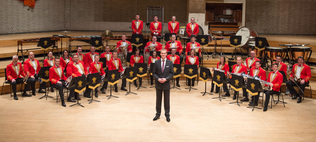
The Cory Band hails from the Rhondda Valley in South Wales, where they were formed in 1884. The band has enjoyed an illustrious record since that time, noted highlights being 1980, when the band became European Champions, and, in their centenary year of 1984, when they won the third in a hat-trick of National Championship titles at the Royal Albert Hall, London.
In 2000 the band appointed Dr. Robert Childs as their Musical Director and has since enjoyed new levels of success. During the millennium year they won both the British Open and National Brass Band Championships, taking the British Open shield home to Wales for the first time in the contest’s 148-year history. They won the Open again in 2002, and also 2007. In 2008, Cory then won the European Championships in Stavanger, Norway, and retained the title in Ostende, Belgium the following year, and also in 2009 winning the World Championships in Kerkade, Holland.
The band has also enjoyed huge success on the concert platform, and is a keen champion of new music for brass.
Craig has worked with the band on a number of occasions, most notably in 2003, directing them in London for the Golden Jubilee celebrations and procession of the Coronation Coach of Her Majesty Queen Elizabeth II. Recently he has also assisted the band in a development capacity, particularly in developing their youth outreach initiative, the Cory Academy
Further information on the Cory Band and its activities can be found at its website www.coryband.com
In 2000 the band appointed Dr. Robert Childs as their Musical Director and has since enjoyed new levels of success. During the millennium year they won both the British Open and National Brass Band Championships, taking the British Open shield home to Wales for the first time in the contest’s 148-year history. They won the Open again in 2002, and also 2007. In 2008, Cory then won the European Championships in Stavanger, Norway, and retained the title in Ostende, Belgium the following year, and also in 2009 winning the World Championships in Kerkade, Holland.
The band has also enjoyed huge success on the concert platform, and is a keen champion of new music for brass.
Craig has worked with the band on a number of occasions, most notably in 2003, directing them in London for the Golden Jubilee celebrations and procession of the Coronation Coach of Her Majesty Queen Elizabeth II. Recently he has also assisted the band in a development capacity, particularly in developing their youth outreach initiative, the Cory Academy
Further information on the Cory Band and its activities can be found at its website www.coryband.com
Cwmaman Institute Band
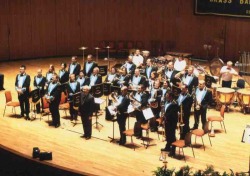
Cwmaman Band was founded in 1876 and became part of the Cwmaman Institute in 1904; a partnership which has bred great success over the years. The band also held close links with Tower Colliery, the last surviving deep mine in Wales, and led the historic march to the colliery on their successful re-opening on 2nd January 1995. Cwmaman also had the privilege of leading the procession through the City of Cardiff to the City Hall when the South Wales Miners Union received Freedom of the City on 1st April 1995.
The band has departed the British Isles on many occasions, with the most memorable being its first European tour when it represented the Cynon Valley in the Rutenfest parade in Rhondda Cynon Taf's twin town of Ravensburg, Germany. It was here that the band played to its biggest audience of 20,000 people.
The band’s main life line is the Cwmaman Institute Public Hall. It is at the institute that the band has now returned to rehearse in its newly constructed band room since June 2000.
The band has been in the prizes of many contests but the most memorable was the prestigious win of the Grand Shield contest in 2002, where Cwmaman qualified for the UK's most prestigious contest, the British Open Championship, and began their campaign with a 5th prize placing on John McCabe's Maunsell Forts.
Craig first began working with Cwmaman in the autumn of 2008, and during his tenure the band undertook its second visit to Germany, performing in the Nurtingen Tattoo together with the Stadtkapelle Nurtingen in June 2009. Cwmaman also became the 2009 WWBBA Champions, and ended that very successful year as the overall Runner Up Welsh League Champions.
The band has departed the British Isles on many occasions, with the most memorable being its first European tour when it represented the Cynon Valley in the Rutenfest parade in Rhondda Cynon Taf's twin town of Ravensburg, Germany. It was here that the band played to its biggest audience of 20,000 people.
The band’s main life line is the Cwmaman Institute Public Hall. It is at the institute that the band has now returned to rehearse in its newly constructed band room since June 2000.
The band has been in the prizes of many contests but the most memorable was the prestigious win of the Grand Shield contest in 2002, where Cwmaman qualified for the UK's most prestigious contest, the British Open Championship, and began their campaign with a 5th prize placing on John McCabe's Maunsell Forts.
Craig first began working with Cwmaman in the autumn of 2008, and during his tenure the band undertook its second visit to Germany, performing in the Nurtingen Tattoo together with the Stadtkapelle Nurtingen in June 2009. Cwmaman also became the 2009 WWBBA Champions, and ended that very successful year as the overall Runner Up Welsh League Champions.
The Eagley Band
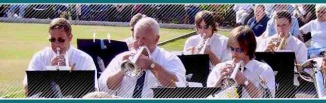
Eagley Band was formed in the winter of 1850, initially as the Eagley Sunday School Band, attached to the Eagley Mills, a group of textile mills sited to the north of Bolton, Lancashire.
The band entered their first contest in 1885 held at Kearsley Moor and managed to win third prize (and the princely sum of £6) under their conductor Edwin Swift. Swift, along with John Gladney and Alexander Owen, was one of the "Great Triumvirate", a trio of conductors who played a very important role in the development of bands and band music. Swift was also the man who introduced music of Wagner to brass bands. Despite being in great demand with other ensembles, Swift continued to direct Eagley until his death in 1904.
The first surviving photograph of the Band was taken in 1898 and depicts the members in ordinary suits and "billy cock hats", the first uniform being purchased in 1905. The Band continued to enter competitions and with the dedication of its members became one if the premier bands in the country, notable successes included appearances as far a field as Kirkcaldy and also the famous Belle Vue contest (now known as The Grand Shield and British Open Championships).
The dawning of the First World War reduced the Bands activities to virtually nothing with many musicians leaving for the front line, and yet Eagley was fortunate with a fresh pool of talent to draw on from the mills. It was not until late 1919 that the Band resumed playing in full, the only contribution during the War being a lone member who performed the Last Post daily at a memorial service to the fallen. The Second World War also took it's toll on proceedings, although a Youth Band was formed during this time ensuring the continuation of the Band. The local newspaper reported on their first concert held in the mills in 1945.
Contest success followed the Wars, which in turn led to Radio broadcasts and in 1956 a television appearance, quite an achievement at that time, the medium still being in its infancy. By this time, Eagley were under the leadership of Ernest Appleyard, a Bolton man who has distinguished himself in the army and many of the great bands of the time, under such men as Sir Adrian Boult, and Harry Mortimer OBE.
1971 brought grave news for the Band, Eagley Mills were to close bringing the 120 year old association with the Band to an end. Until this time the mills had provided rehearsal facilities within the complex and also the Band instruments. Ownership of the instruments was generously transferred to the Band and yet it still found itself without a bandroom or financial backing. Despite this the Band continued to be successful, thanks in part to the support of local schools, most notably Thornleigh College from whom a nucleus of players joined in the early seventies, some of whom are still in the Band today.
Particular success in recent times include two appearances at the national finals at the Royal Albert Hall, a hat trick of wins in the 1999 contest season with victories at Blackburn, Morecambe and Fleetwood contests and promotion to the First Section under the baton of Craig Roberts. Craig was Musical Director of the band from 1997 to 2001.
Further information on the band can be found at their website www.eagleyband.co.uk
The band entered their first contest in 1885 held at Kearsley Moor and managed to win third prize (and the princely sum of £6) under their conductor Edwin Swift. Swift, along with John Gladney and Alexander Owen, was one of the "Great Triumvirate", a trio of conductors who played a very important role in the development of bands and band music. Swift was also the man who introduced music of Wagner to brass bands. Despite being in great demand with other ensembles, Swift continued to direct Eagley until his death in 1904.
The first surviving photograph of the Band was taken in 1898 and depicts the members in ordinary suits and "billy cock hats", the first uniform being purchased in 1905. The Band continued to enter competitions and with the dedication of its members became one if the premier bands in the country, notable successes included appearances as far a field as Kirkcaldy and also the famous Belle Vue contest (now known as The Grand Shield and British Open Championships).
The dawning of the First World War reduced the Bands activities to virtually nothing with many musicians leaving for the front line, and yet Eagley was fortunate with a fresh pool of talent to draw on from the mills. It was not until late 1919 that the Band resumed playing in full, the only contribution during the War being a lone member who performed the Last Post daily at a memorial service to the fallen. The Second World War also took it's toll on proceedings, although a Youth Band was formed during this time ensuring the continuation of the Band. The local newspaper reported on their first concert held in the mills in 1945.
Contest success followed the Wars, which in turn led to Radio broadcasts and in 1956 a television appearance, quite an achievement at that time, the medium still being in its infancy. By this time, Eagley were under the leadership of Ernest Appleyard, a Bolton man who has distinguished himself in the army and many of the great bands of the time, under such men as Sir Adrian Boult, and Harry Mortimer OBE.
1971 brought grave news for the Band, Eagley Mills were to close bringing the 120 year old association with the Band to an end. Until this time the mills had provided rehearsal facilities within the complex and also the Band instruments. Ownership of the instruments was generously transferred to the Band and yet it still found itself without a bandroom or financial backing. Despite this the Band continued to be successful, thanks in part to the support of local schools, most notably Thornleigh College from whom a nucleus of players joined in the early seventies, some of whom are still in the Band today.
Particular success in recent times include two appearances at the national finals at the Royal Albert Hall, a hat trick of wins in the 1999 contest season with victories at Blackburn, Morecambe and Fleetwood contests and promotion to the First Section under the baton of Craig Roberts. Craig was Musical Director of the band from 1997 to 2001.
Further information on the band can be found at their website www.eagleyband.co.uk
Grimethorpe Colliery Band
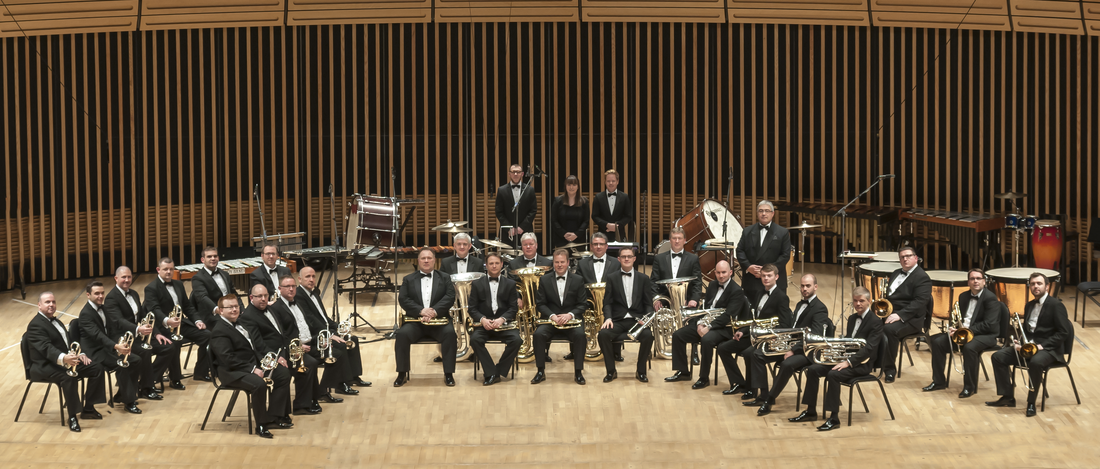
"The brass bands of this country are unique, and the Grimethorpe Band is unique amongst them" - Sir Harrison Birtwistle
Formed in 1917, during the First World War, Grimethorpe Colliery Band is a British institution. National and British Open Champions on numerous occasions, the band’s contest successes remain legendary. These include 16 Brass In Concert Championship titles, 11 times Yorkshire Regional Champions, two English National Championship victories, four times British Open Champions and four times National Champion Brass Band of Great Britain.
“Sensational – performing favourite classics in spectacular style!” - The Times
Grimethorpe's diverse noted concert performances include those at the FIFA World Cup, BAFTA Awards, BBC Proms, Eurovision and London 2012 Olympic Games Opening Ceremony, together with a wealth of national and international television / radio appearances and professional recordings. The band has been the recipient of two gold discs, as well as a BAFTA nomination for its contributions to the global hit movie “Brassed Off” for which Grimethorpe was the focal point.
“Tompkinson, Postlethwaite and Carter are stand-outs in an impressive ensemble cast, but for many, the brass band music of Grimethorpe comes as the real revelation” - Time Out
The Royal Albert Hall, Symphony Hall, Barbican, Westminster Abbey, European Parliament, Sydney Opera House and more, have all played host to Grimethorpe. With tours to Australia, Hong Kong, Japan, New Zealand, and concerts & festival appearances throughout Europe, the band’s performance reputation remains unsurpassed.
“A thoroughly entertaining show & a must for all music enthusiasts” - The Guardian
In addition to continuing to delight audiences across the globe, Grimethorpe also continues to invest in and support its local community in Grimethorpe, Barnsley and South Yorkshire, particularly through its youth music initiatives and community performances, both locally and on a national scale.
"Grimethorpe Colliery Band - the finest jewel in the world of brass bands, and a unique cultural asset" - Sir Peter Maxwell Davies
Craig worked with Grimethorpe and Musical Director Dr. Robert Childs on their "Lest We Forget" themed record breaking 16th Brass In Concert Championships win in 2014, and their tour of Australia in August 2015 as Narrator and Tour Manager. Craig was honoured to be a Trustee of Grimethorpe Colliery Band for a five year period from 2014 to 2019, a position he resumed in 2020. Craig conducted the band in concert at The Anvil, Basingstoke in March 2022
Further information on Grimethorpe Colliery and their activities can be found at www.grimethorpeband.com
The Band of Her Majesty's Grenadier Guards
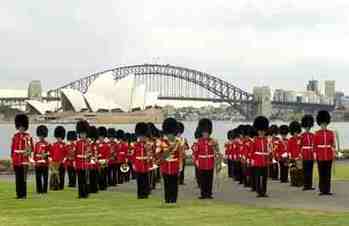
The oldest of all the bands of the British Army, the history of The Band of the Grenadier Guards records the entire development of military music. From its formation, the Regiment marched to the then usual accompaniment of drums and fife. In 1685 Charles II authorised the maintenance of 12 Hautbois (an early wind instrument) and this is considered to be the beginning of the band as a distinct entity. Indeed, so significant was the King's death for the musicians of the Grenadier Guards that from his passing until the Second World War, the bass drummer of the band wore a black armband of mourning.
From the foundation of the band until some time in the 19th Century, the musicians numbered between twelve and nineteen, the make up being 'one man from each company'. By 1844, this had been expanded to several musicians per company, with thirty-eight in the band by 1848. Numbers reached their peak at the end of the 1970s reaching sixty musicians. Today, the operational strength of the band is forty-nine.
Though the height of tradition, the band has adapted itself over three centuries to contemporary tastes from Bach and Handel to Wagner and Schumann, through the era of the music hall and the Jazz Age to the modern wind band music of Martin Ellerby and Phillip Sparke.
The instruments of the band have changed accordingly. French Horns first joined the band in 1725 and by 1794 the band consisted of one flute, six clarinets, three bassoons, three horns, one trumpet, bass drum, cymbals and tambourine. It was to a similar baroque ensemble that Handel presented the march 'Scipio', before the premier of his opera of the same name in 1726. The march can still be heard accompanying the Grenadier Guards at every Changing of the Guard at Buckingham Palace. Instruments such as the euphonium, flugel horn and saxophone were introduced as they came to prominence in the wider musical world, until by 1859 the band existed in similar form to that in which we see it today.
Just as the band's music has been a constant through 300 years of British History, so has its military role. It was not until the 1890s that the musicians were taken out of their battalions where they lived and worked with the regular soldiers and joined the staff of the regiment. Their position then and today was accurately described by George IV (talking about the band in 1803):"These men are to be drilled in their exercise and in case of actual service are to fall in with their companies completely armed and accoutered".
The band has served alongside the Regiment in conflicts throughout modern histories, playing in triumph in Paris in 1815 after Waterloo, when the first Regiment of Foot became the 'Grenadier Guards', and gained the now world-famous bearskins after capturing them from Napoleon's Imperial Guard. Today the band, when mobilised, operates with the Army Medical Services in a chemical decontamination role.
Today's band plays at the whole range of State & Ceremonial occasions including:
Changing of the Guard
State visits
Investitures
Banquets
and with the massed bands at the
Trooping of the Colour
Remembrance Sunday Parade
They also represent Britain and the Crown on innumerable other occasions.
Craig worked with the Band and then Director of Music Major Denis Burton on the 2006 project VE Day 60. Further information on the Band of the Grenadier Guards can be found on their website at http://www.army.mod.uk/music/corps-band/454.aspx
From the foundation of the band until some time in the 19th Century, the musicians numbered between twelve and nineteen, the make up being 'one man from each company'. By 1844, this had been expanded to several musicians per company, with thirty-eight in the band by 1848. Numbers reached their peak at the end of the 1970s reaching sixty musicians. Today, the operational strength of the band is forty-nine.
Though the height of tradition, the band has adapted itself over three centuries to contemporary tastes from Bach and Handel to Wagner and Schumann, through the era of the music hall and the Jazz Age to the modern wind band music of Martin Ellerby and Phillip Sparke.
The instruments of the band have changed accordingly. French Horns first joined the band in 1725 and by 1794 the band consisted of one flute, six clarinets, three bassoons, three horns, one trumpet, bass drum, cymbals and tambourine. It was to a similar baroque ensemble that Handel presented the march 'Scipio', before the premier of his opera of the same name in 1726. The march can still be heard accompanying the Grenadier Guards at every Changing of the Guard at Buckingham Palace. Instruments such as the euphonium, flugel horn and saxophone were introduced as they came to prominence in the wider musical world, until by 1859 the band existed in similar form to that in which we see it today.
Just as the band's music has been a constant through 300 years of British History, so has its military role. It was not until the 1890s that the musicians were taken out of their battalions where they lived and worked with the regular soldiers and joined the staff of the regiment. Their position then and today was accurately described by George IV (talking about the band in 1803):"These men are to be drilled in their exercise and in case of actual service are to fall in with their companies completely armed and accoutered".
The band has served alongside the Regiment in conflicts throughout modern histories, playing in triumph in Paris in 1815 after Waterloo, when the first Regiment of Foot became the 'Grenadier Guards', and gained the now world-famous bearskins after capturing them from Napoleon's Imperial Guard. Today the band, when mobilised, operates with the Army Medical Services in a chemical decontamination role.
Today's band plays at the whole range of State & Ceremonial occasions including:
Changing of the Guard
State visits
Investitures
Banquets
and with the massed bands at the
Trooping of the Colour
Remembrance Sunday Parade
They also represent Britain and the Crown on innumerable other occasions.
Craig worked with the Band and then Director of Music Major Denis Burton on the 2006 project VE Day 60. Further information on the Band of the Grenadier Guards can be found on their website at http://www.army.mod.uk/music/corps-band/454.aspx
The Leyland Band
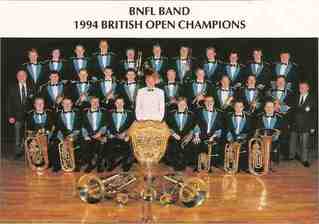
The Leyland Band was established in 1946 in the heart of industrial Lancashire as the Leyland Motors Band, taking its name from the world famous truck and bus company. Now an independent group of some thirty musicians, the Band has retained its local connection and now proudly bears the name of its home town.
The last twenty five years of the Band’s existence has been the most consistently successful in its history. After a meteoric rise through the various sections, the Band has witnessed scores of prize awards at all the major competitions in the brass band arena. Leyland Band won the 1994 British Open Championships, the All England Masters in 1989, 1992 and 2003, and the 2005 National Brass Band Championships.
Leyland Band has also rightly earned its reputation as an unrivalled concert entertainer by producing dynamic and unique performances both at home and abroad. Leyland Band has always fostered a strong sense of originality. In 1980, the ensemble was the first western brass band to tour Japan, a country it revisited along with South Korea in the 1990s. In the last decade, four coast to coast tours of the United States of America are testament to the Band’s far-reaching appeal. Numerous performances on continental Europe have been a feature of the band’s work on the concert platform. It has also had great success at the Brass in Concert Championships, having been awarded the Brass in Concert crown on four occasions.
Leyland Band has appeared in numerous television and radio broadcasts, specifically for the Granada Band of the Year, BBC Radio 3 and Listen to the Band. It has an impressive discography and has recorded over 40 commercial CDs.
Craig worked with Leyland, and guest conductor Robert Childs, at the inaugural Welsh Brass Arts Festival in 2001. Craig narrated Howard Snell's Images of the Millennium, performed by the massed bands of Leyland and Parc & Dare under Robert's baton. Numerous works from this concert are featured on the album Welsh Brass Festival Volume I, available on the Paragon Recordings label.
Further information on Leyland Band can be found at their own website www.leylandband.co.uk
The last twenty five years of the Band’s existence has been the most consistently successful in its history. After a meteoric rise through the various sections, the Band has witnessed scores of prize awards at all the major competitions in the brass band arena. Leyland Band won the 1994 British Open Championships, the All England Masters in 1989, 1992 and 2003, and the 2005 National Brass Band Championships.
Leyland Band has also rightly earned its reputation as an unrivalled concert entertainer by producing dynamic and unique performances both at home and abroad. Leyland Band has always fostered a strong sense of originality. In 1980, the ensemble was the first western brass band to tour Japan, a country it revisited along with South Korea in the 1990s. In the last decade, four coast to coast tours of the United States of America are testament to the Band’s far-reaching appeal. Numerous performances on continental Europe have been a feature of the band’s work on the concert platform. It has also had great success at the Brass in Concert Championships, having been awarded the Brass in Concert crown on four occasions.
Leyland Band has appeared in numerous television and radio broadcasts, specifically for the Granada Band of the Year, BBC Radio 3 and Listen to the Band. It has an impressive discography and has recorded over 40 commercial CDs.
Craig worked with Leyland, and guest conductor Robert Childs, at the inaugural Welsh Brass Arts Festival in 2001. Craig narrated Howard Snell's Images of the Millennium, performed by the massed bands of Leyland and Parc & Dare under Robert's baton. Numerous works from this concert are featured on the album Welsh Brass Festival Volume I, available on the Paragon Recordings label.
Further information on Leyland Band can be found at their own website www.leylandband.co.uk
Northop Silver Band
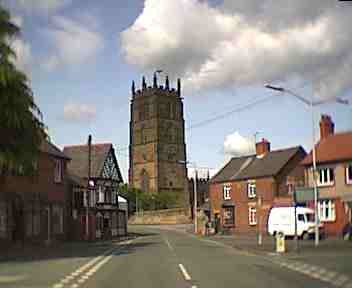
Northop Band was established in 1892 by a group of young men in Soughton (Sychdyn), North Wales. Within two years they had relocated to nearby Northop a small village a few miles from the town of Mold. Very little is known of the early years as there are no written records but it is known that the bands' first contest success was in 1921 at Flint.
The Band was kept busy playing concerts and contestsever since, gaining many successes. As a result of its success and professional attitude, the band has performed at some of the most prestigious venues in the country including the Liverpool Philharmonic Hall, St. David's Hall, Cardiff and the Royal Albert Hall, London, also playing in the theatre production of "Brassed Off" in Theatre Clwyd.
As well as the senior band Northop also boasts 2 thriving youth bands who both also regularly compete and perform.
Craig was Musical Director of the band in the early years of the millennium, enjoying considerable success on the concert and contest stage, which included directing the band to two consecutive North Wales Brass Band Championship victories; plus performances with soloists Nick Hudson, David Childs & Guest Conductor James Scott; and a tour to Germany, where the band participated in the 2002 Hamburg Polizei Show. Further information on Northop Band can be found at its own website www.northopsilverband.com
The Band was kept busy playing concerts and contestsever since, gaining many successes. As a result of its success and professional attitude, the band has performed at some of the most prestigious venues in the country including the Liverpool Philharmonic Hall, St. David's Hall, Cardiff and the Royal Albert Hall, London, also playing in the theatre production of "Brassed Off" in Theatre Clwyd.
As well as the senior band Northop also boasts 2 thriving youth bands who both also regularly compete and perform.
Craig was Musical Director of the band in the early years of the millennium, enjoying considerable success on the concert and contest stage, which included directing the band to two consecutive North Wales Brass Band Championship victories; plus performances with soloists Nick Hudson, David Childs & Guest Conductor James Scott; and a tour to Germany, where the band participated in the 2002 Hamburg Polizei Show. Further information on Northop Band can be found at its own website www.northopsilverband.com
Parc & Dare Band
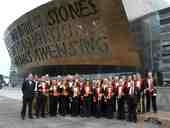
Founded in 1893, the Parc and Dare Band has long been one of Wales best-known and respected brass bands. Originally formed as the Cwmparc Temperance Drum and Fife Band in 1893, the band went all brass a year later to become the Cwmparc Silver Band. They later began receiving financial support from the Ocean Coal Company (who operated the Parc and the Dare collieries in the Treorchy area),which gave rise to the Parc and Dare Workmen's Silver Band.
Historically, the band’s achievements are legion, including dozens of championship wins, and fourteen victories as Champion Band of Wales. The band can boast over 250 appearances on BBC Radio and television, and performances ranging from small venues to some of the country's most prestigious, the Millennium Stadium, Wales Millennium Centre, Cardiff; Royal Festival Hall, Royal Albert Hall, and Royal Academy of Music, London included.
Craig was Musical Director of the band for almost a decade, and presided over one of the most successful periods in the band’s history. Under his baton Parc & Dare became Champion First Section Band of Wales in 2004 and 2005, Runner-Up Champion First Section Band of Great Britain, and Champion Band in the Championship Section of the Welsh League. In 2006, under Craig's direction the band also qualified, for the first time in almost twenty years, for the right to represent Wales at the Finals of the National Championships of Great Britain at London’s Royal Albert Hall, following their success at that year's Welsh Regional Championships.
Under Craig’s leadership, between 2001 and 2008, Parc & Dare also became renowned for its unique and innovative artistic outlook and programming. The band toured the groundbreaking musical arts projects Brass Tracks, Electric Brass, World Dances, Carbon 12 and The Planets, and performed alongside numerous leading artists which included the Band of Her Majesty’s Grenadier Guards, the Russian Cossack State Dance Company, Royal Harpist Catrin Finch, trumpet soloist James Watson, “the world’s favourite Phantom” Peter Karrie, plus various other leading soloists, bands and choirs.
Further information on all of the above can be found in the Projects section of this site
Historically, the band’s achievements are legion, including dozens of championship wins, and fourteen victories as Champion Band of Wales. The band can boast over 250 appearances on BBC Radio and television, and performances ranging from small venues to some of the country's most prestigious, the Millennium Stadium, Wales Millennium Centre, Cardiff; Royal Festival Hall, Royal Albert Hall, and Royal Academy of Music, London included.
Craig was Musical Director of the band for almost a decade, and presided over one of the most successful periods in the band’s history. Under his baton Parc & Dare became Champion First Section Band of Wales in 2004 and 2005, Runner-Up Champion First Section Band of Great Britain, and Champion Band in the Championship Section of the Welsh League. In 2006, under Craig's direction the band also qualified, for the first time in almost twenty years, for the right to represent Wales at the Finals of the National Championships of Great Britain at London’s Royal Albert Hall, following their success at that year's Welsh Regional Championships.
Under Craig’s leadership, between 2001 and 2008, Parc & Dare also became renowned for its unique and innovative artistic outlook and programming. The band toured the groundbreaking musical arts projects Brass Tracks, Electric Brass, World Dances, Carbon 12 and The Planets, and performed alongside numerous leading artists which included the Band of Her Majesty’s Grenadier Guards, the Russian Cossack State Dance Company, Royal Harpist Catrin Finch, trumpet soloist James Watson, “the world’s favourite Phantom” Peter Karrie, plus various other leading soloists, bands and choirs.
Further information on all of the above can be found in the Projects section of this site
Regimental Band and Corps of Drums of the Royal Welsh
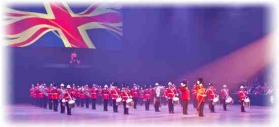
The Regimental Band of The Royal Welsh has versatility of style and repertoire, which is both unique and highly popular whether on parade as a marching band, or on the concert platform. Their playing, marching and singing portrays that musical quality for which the Band is renowned throughout Wales. It is also interesting to note that the Band is the last surviving all-brass band left within British Army Military Music.
The Band have travelled abroad extensively, including countries such as Belgium, Germany, Canada, France, and in 2007 toured Australia and performed in the Sydney Opera House. In 2009 they again travelled to Canada to participate in the Royal Nova Scotia International Tattoo.
They have also had the privilege to play on many occasions for the Royal Family, in particular His Royal Highness The Prince of Wales, not only in the Principality of Wales, but also in many other parts of the British Isles. A major highlight in 2005 for the Band was to play in front of Her Majesty, The Queen, at the Royal Variety Performance at the Wales Millennium Centre, Cardiff.
The Band also play at many major sporting events, and their continued presence at the world-famous Millennium Stadium in Cardiff has been greatly appreciated by rugby spectators across the world.
On many of their engagements the Band is enhanced by the presence of The Corps of Drums of The Royal Welsh who, with their own inimitable style and expertise, add the final polish to any engagement.
Craig was instrumental in securing the band's participation in the 2009 Royal Nova Scotia International Tattoo and also provided the voiceovers for their performance in the show, a video clip of which can be found here
Further information on the Regimental Band and Corps of Drums of the Royal Welsh can be found at their own website www.royalwelshband.com
The Band have travelled abroad extensively, including countries such as Belgium, Germany, Canada, France, and in 2007 toured Australia and performed in the Sydney Opera House. In 2009 they again travelled to Canada to participate in the Royal Nova Scotia International Tattoo.
They have also had the privilege to play on many occasions for the Royal Family, in particular His Royal Highness The Prince of Wales, not only in the Principality of Wales, but also in many other parts of the British Isles. A major highlight in 2005 for the Band was to play in front of Her Majesty, The Queen, at the Royal Variety Performance at the Wales Millennium Centre, Cardiff.
The Band also play at many major sporting events, and their continued presence at the world-famous Millennium Stadium in Cardiff has been greatly appreciated by rugby spectators across the world.
On many of their engagements the Band is enhanced by the presence of The Corps of Drums of The Royal Welsh who, with their own inimitable style and expertise, add the final polish to any engagement.
Craig was instrumental in securing the band's participation in the 2009 Royal Nova Scotia International Tattoo and also provided the voiceovers for their performance in the show, a video clip of which can be found here
Further information on the Regimental Band and Corps of Drums of the Royal Welsh can be found at their own website www.royalwelshband.com
Seindorf Arian Crwbin
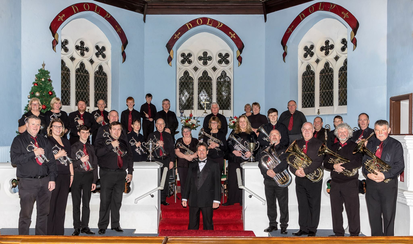
Seindorf Arian Crwbin / Crwbin Silber Band was originally formed in 1891 and traditionally linked to the coal mining industry of the Gwendraeth Valley in West Wales. The band has been well supported by its local community and served that same community closely throughout its history.
During the 1990's the band struggled with membership and became non-competitive, performing only at carnivals and Christmas festivities. On Boxing Day 1999 however, it was decided the band would reform and compete at the forthcoming National Eisteddfod to be held at Llanelli in the year 2000. From there the band continued to develop.
2010 was a good year for Crwbin, seeing the band gain the title of Welsh Regional Fourth Section Champions and WWBBA Third Section Champions. The band also won the Fourth Section title at the National Eisteddfod of Wales, held that year in Bala. As a result of the band's achievements, Crwbin were subsequently promoted to the Third Section nationally, and in 2012 gained further promotion to Second Section.
In mid-2016, the band appointed Craig as Professional Conductor and, during his tenure from then through to December 2018, Crwbin enjoyed the most successful period in its 125 year history to date. The band became the 2017 National Eisteddfod Second Section Champion Band of Wales, won a series of SEWBBA & WWBBA Welsh League championship prizes and were placed Runner-Up Second Section Welsh League Champions in both 2017 & 2018. The band also undertook a series of highly successful concerts at Neuadd Pontyberem Hall and toured to Moscow, Russia with Symphonic Brass Wales in May 2017.
Excerpts from Crwbin's winning performance at the 2017 National Eisteddfod of Wales, conducted by Craig, can be found in the video section of this website here
During the 1990's the band struggled with membership and became non-competitive, performing only at carnivals and Christmas festivities. On Boxing Day 1999 however, it was decided the band would reform and compete at the forthcoming National Eisteddfod to be held at Llanelli in the year 2000. From there the band continued to develop.
2010 was a good year for Crwbin, seeing the band gain the title of Welsh Regional Fourth Section Champions and WWBBA Third Section Champions. The band also won the Fourth Section title at the National Eisteddfod of Wales, held that year in Bala. As a result of the band's achievements, Crwbin were subsequently promoted to the Third Section nationally, and in 2012 gained further promotion to Second Section.
In mid-2016, the band appointed Craig as Professional Conductor and, during his tenure from then through to December 2018, Crwbin enjoyed the most successful period in its 125 year history to date. The band became the 2017 National Eisteddfod Second Section Champion Band of Wales, won a series of SEWBBA & WWBBA Welsh League championship prizes and were placed Runner-Up Second Section Welsh League Champions in both 2017 & 2018. The band also undertook a series of highly successful concerts at Neuadd Pontyberem Hall and toured to Moscow, Russia with Symphonic Brass Wales in May 2017.
Excerpts from Crwbin's winning performance at the 2017 National Eisteddfod of Wales, conducted by Craig, can be found in the video section of this website here
Treherbert & District Band
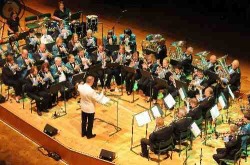
Treherbert & District is a community band based in South Wales' Rhondda valley. Historians believe it was originally the Treherbert Drum and Fife Band, in existence around 1897, which was the forerunner to today's band. It was however the brass band set up by the miners of the Glenrhondda Colliery which really put Treherbert on South Wales' musical map.
Glenrhondda was opened in 1911 by the Glenavon Garw Collieries Limited, a member of the South Wales Coal Owners association, and was served by the Rhondda and Swansea Bay railway. It consisted of two levels a slant and a pit and during its lifetime employed anywhere between 200 and 500 men, producing both house and manufacturing coals.
After nationalisation the colliery was placed in the National Coal Boards' South Western division's, No.3 Area, Group 4 and at that time No.1 and 2 pits had a combined manpower of over 450 men, whilst the No.2 level employed approximately 70 men. The no.2 level had closed by 1954 and the colliery as a whole was closed by the National Coal Board in 1966
Following the closure of the colliery, the band continued but was renamed the Upper Rhondda Band. It later changed its name to Treherbert & District Silver Band, Treherbert Band, and now finally to Treherbert & District Band.
Over the years the band has enjoyed many successes at the National Eisteddfod of Wales, the Mineworkers Open, the National Championships of Great Britain and the Welsh Regional Championships. During the 1990's the band gained promotion from fourth section right through to the elite Championship Section under the baton of Graham Shepherd, becoming Welsh League Champions in 2002 and Welsh Regional Champions in 2003.
Under Craig's direction the band became Runner Up Welsh Regional Champions in 2007 & 2011, also representing Wales at the Finals of the National Championships of Great Britain in Harrogate and Cheltenham. The band also became Runner Up South Wales Miner's Eisteddfod Champions and National Eisteddfod Champions in 2011.
Now a symphonic brass ensemble, Treherbert & District continue to maintain a firm commitment to training young people in the art of brass playing, and supporting events and the community in its local area. Further information on the band and its activities can be found at its own website www.treherbertband.weebly.com
Video of the band in performance at the National Eisteddfod of Wales, conducted by Craig, can be found in the video section of this website here
Glenrhondda was opened in 1911 by the Glenavon Garw Collieries Limited, a member of the South Wales Coal Owners association, and was served by the Rhondda and Swansea Bay railway. It consisted of two levels a slant and a pit and during its lifetime employed anywhere between 200 and 500 men, producing both house and manufacturing coals.
After nationalisation the colliery was placed in the National Coal Boards' South Western division's, No.3 Area, Group 4 and at that time No.1 and 2 pits had a combined manpower of over 450 men, whilst the No.2 level employed approximately 70 men. The no.2 level had closed by 1954 and the colliery as a whole was closed by the National Coal Board in 1966
Following the closure of the colliery, the band continued but was renamed the Upper Rhondda Band. It later changed its name to Treherbert & District Silver Band, Treherbert Band, and now finally to Treherbert & District Band.
Over the years the band has enjoyed many successes at the National Eisteddfod of Wales, the Mineworkers Open, the National Championships of Great Britain and the Welsh Regional Championships. During the 1990's the band gained promotion from fourth section right through to the elite Championship Section under the baton of Graham Shepherd, becoming Welsh League Champions in 2002 and Welsh Regional Champions in 2003.
Under Craig's direction the band became Runner Up Welsh Regional Champions in 2007 & 2011, also representing Wales at the Finals of the National Championships of Great Britain in Harrogate and Cheltenham. The band also became Runner Up South Wales Miner's Eisteddfod Champions and National Eisteddfod Champions in 2011.
Now a symphonic brass ensemble, Treherbert & District continue to maintain a firm commitment to training young people in the art of brass playing, and supporting events and the community in its local area. Further information on the band and its activities can be found at its own website www.treherbertband.weebly.com
Video of the band in performance at the National Eisteddfod of Wales, conducted by Craig, can be found in the video section of this website here
Woods Manufacturing Company Brass Band

The Woods Manufacturing Company Brass Band was set up in 1997 by Guthrie Woods. The band first appeared at the Nova Scotia International Tattoo later that year and then continued to perform in concerts and large scale performances across Canada and North America under the baton of Dave Druce.
Craig became Director of the band in 2000 and under his baton the band then performed at the Royal Nova Scotia International Tattoo (2000-2003), the Virginia International Tattoo (2001/2002) - also accompanying there the Lochiel Drill Team from New Zealand - and the Netherlands Nationale Taptoe (2002) - also accompanying there the National Ceremonial Troop of the Royal Canadian Mounted Police.
The Woods Band also undertook two CD recordings with Craig, "Thine Be the Glory" (featuring soloist David Childs, Dowlais Male Choir and John Cynan Jones, organ) and "All Through the Night" (featuring soloist Jenny Jones, Pontypridd Male Choir & Jonathan Gulliford, organ), both of which are available from www.guthriewoods.com
Craig became Director of the band in 2000 and under his baton the band then performed at the Royal Nova Scotia International Tattoo (2000-2003), the Virginia International Tattoo (2001/2002) - also accompanying there the Lochiel Drill Team from New Zealand - and the Netherlands Nationale Taptoe (2002) - also accompanying there the National Ceremonial Troop of the Royal Canadian Mounted Police.
The Woods Band also undertook two CD recordings with Craig, "Thine Be the Glory" (featuring soloist David Childs, Dowlais Male Choir and John Cynan Jones, organ) and "All Through the Night" (featuring soloist Jenny Jones, Pontypridd Male Choir & Jonathan Gulliford, organ), both of which are available from www.guthriewoods.com